
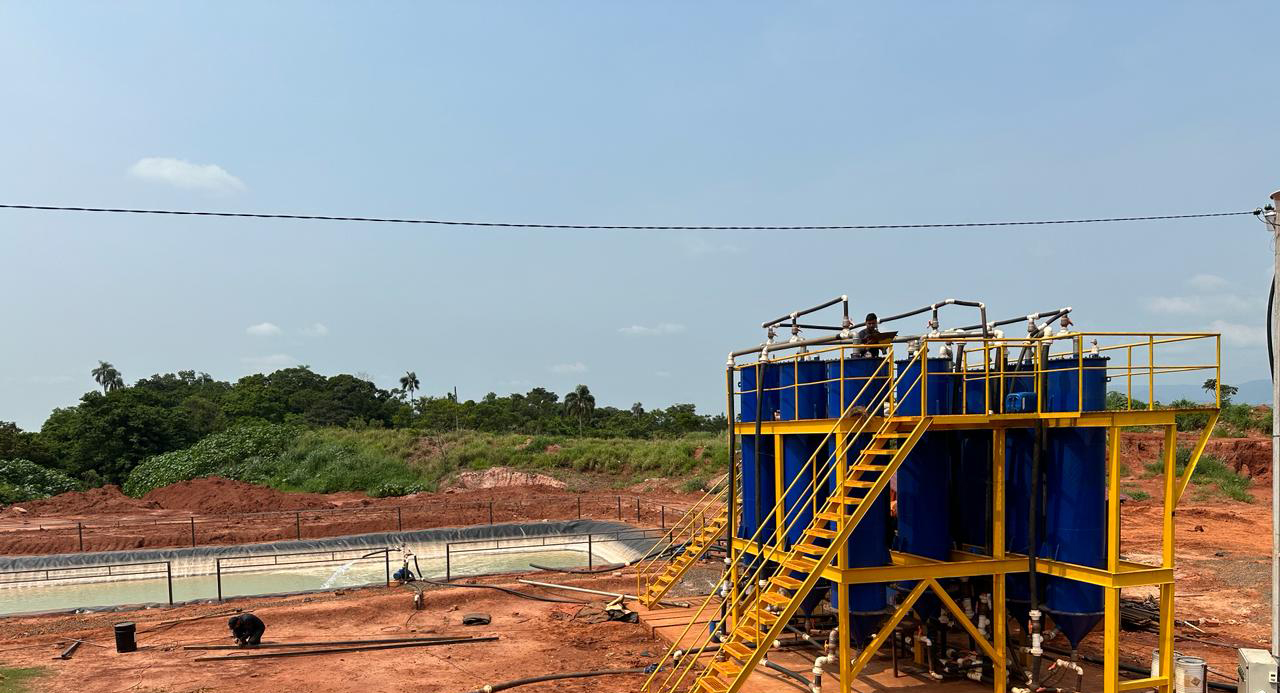

Home to a diverse range of biodiversity, Paraguay is divided in two regions, the Eastern Region and the Chaco Region in the West. Artisanal and small-scale gold mining activities in the country are concentrated entirely in the department of Guairá in the Eastern Region, and represent a growing economic activity in this area.
The artisanal and small-scale gold mining (ASGM) sector in Paraguay emerged in the early 2000s, concentrated almost entirely in the district of Paso Yobái. More than 1,000 people in this municipality now depend directly on small-scale mining for their livelihood. Due to a lack of awareness or availability of alternative technologies, miners typically use the toxic chemical mercury to process their gold ore, causing negative consequences for the environment and surrounding communities in the area.
Artisanal and small-scale gold miners in Paso Yobái are typically organized into associations or cooperatives. However, mining activities are largely informal, as there is no access to mining titles for areas intended for ASGM activities. As a result, access to investment, credit, or other financial benefits that promote more responsible gold production is limited or non-existent.
Following signature of the Minamata Convention on Mercury in 2014 and ratification in 2018, Paraguay presented its National Action Plan for Artisanal and Small-Scale Gold Mining in December 2020, committing to reduce the use of mercury in the sector to protect the environment and the health of local communities.
Key Figures from Paraguay
-
425-473 kg of ASGM gold is produced each year
-
1,000 people work directly in ASGM
-
915-990 kg of mercury is emitted by ASGM annually
-
2:1 mercury to gold ratio used in ASGM processing
Paraguay's Approach
The planetGOLD Paraguay project is working to eliminate the use of mercury in ASGM activities and to promote safe, responsible practices in mineral processing. By working closely with communities, national and local authorities, as well as academic institutions, research centers, and the private and financial sectors, the project aims to develop the necessary regulatory frameworks to promote formalization processes and compliance with environmental and social standards. The project also aims to generate appropriate incentives for miners to access financial services and to generate responsible supply chain models.
The planetGOLD Paraguay project will support 28,500 beneficiaries, including 13,000 women, in reducing mercury use by 0.4 tonnes.
Key Strategies

Support formalization of the ASGM sector | 
Help miners access financing for mercury-free technologies |

Provide technical assistance and training on new technologies | 
Raise awareness and |
Project News
Media Gallery


Resources
Contact
Contact planetGOLD Paraguay
The planetGOLD Paraguay project is implemented by the United Nations Environment Programme and executed by the Ministry of Environment and Sustainable Development (MADES) with technical assistance from Investigación para el Desarrollo (ID).
Mauricio Rodas
Coordinator – planetGOLD Paraguay
[email protected]

| 
| 
|
If you have any complaints related to the planetGOLD Paraguay project, you may complete and submit this form.
Other planetGOLD countries
planetGOLD project sites in Paraguay